
Broiler Chicken Feed Guide: Complete Feeding Schedule, Nutrition & Tips
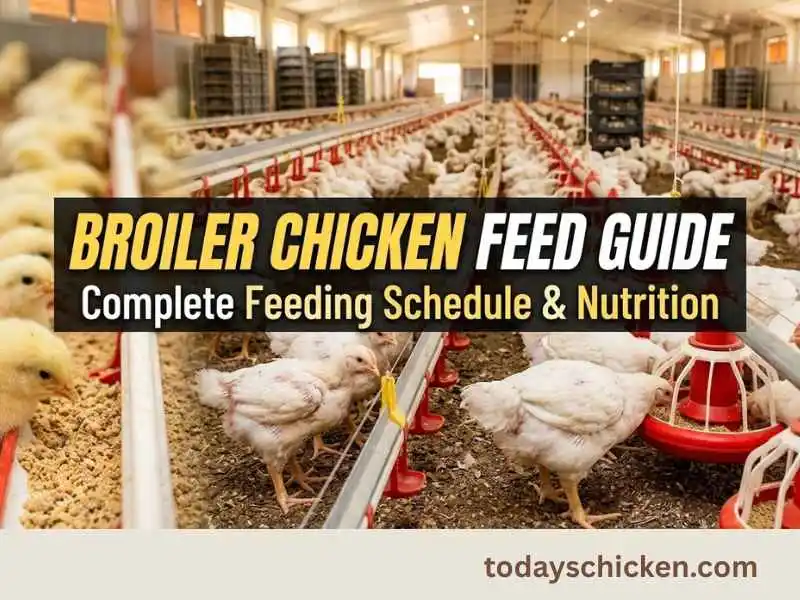
If you’re raising broilers for meat, getting the feed right is the single biggest factor that decides your final results. This broiler chicken feed guide walks you through every growth stage, exact protein and nutrient needs, daily feed quantities, common mistakes, and answers to the questions people search for most on Google.
Whether you’re a backyard poultry keeper or running a small commercial broiler farm, this guide gives you a practical, science-backed feeding plan you can start using today. If you’re still in the planning stage, it’s worth reading our poultry farming business plan in Pakistan alongside this guide to understand the full cost and feed-budget picture before you start.
What Is Broiler Chicken Feed?
Broiler chicken feed is a specially formulated diet designed to help meat-type chickens (broilers) gain weight quickly, convert feed into muscle efficiently, and reach market weight in the shortest possible time — usually 5 to 8 weeks. Unlike layer feed, which is built around egg production, a proper broiler feed guide focuses on high protein and high energy to support rapid growth.
Broiler feed is generally sold — and should be fed — in three distinct stages:
- Starter feed (Day 1–10 or Week 0–3)
- Grower feed (Week 3–6)
- Finisher feed (Week 6 until slaughter)
Each stage has a different protein-to-energy ratio, and switching at the right time is one of the most important parts of any broiler chicken feed guide.
Broiler Feed Stages: Starter, Grower, and Finisher Explained
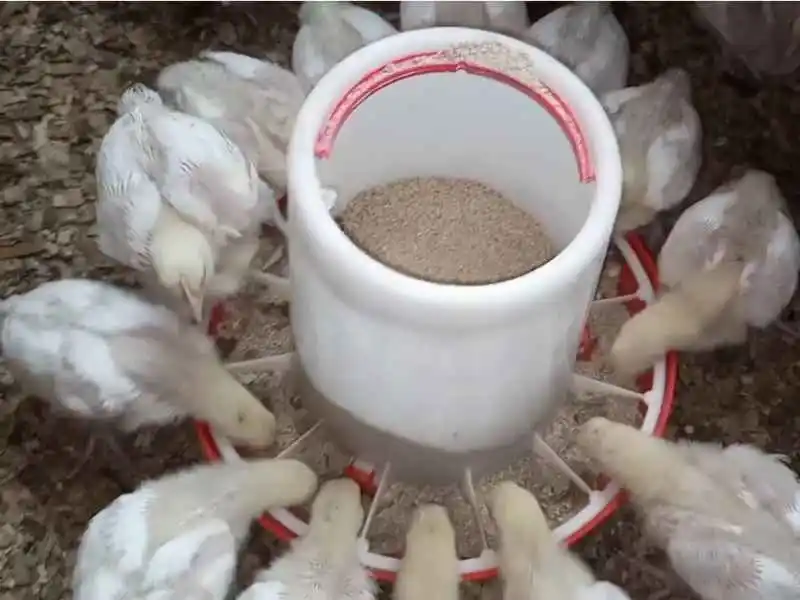
1. Starter Feed (0–3 Weeks)
Newly hatched chicks need the highest protein level of any stage because their organs, muscles, and immune system are developing fast.
- Crude protein: 20–24%
- Metabolizable energy: 2,900–3,000 kcal/kg
- Calcium: ~1.0%
- Form: Crumbles (easier for tiny beaks than pellets or mash)
At this stage, chicks should have feed available at all times (ad-libitum feeding), along with clean, fresh water.
2. Grower Feed (3–6 Weeks)
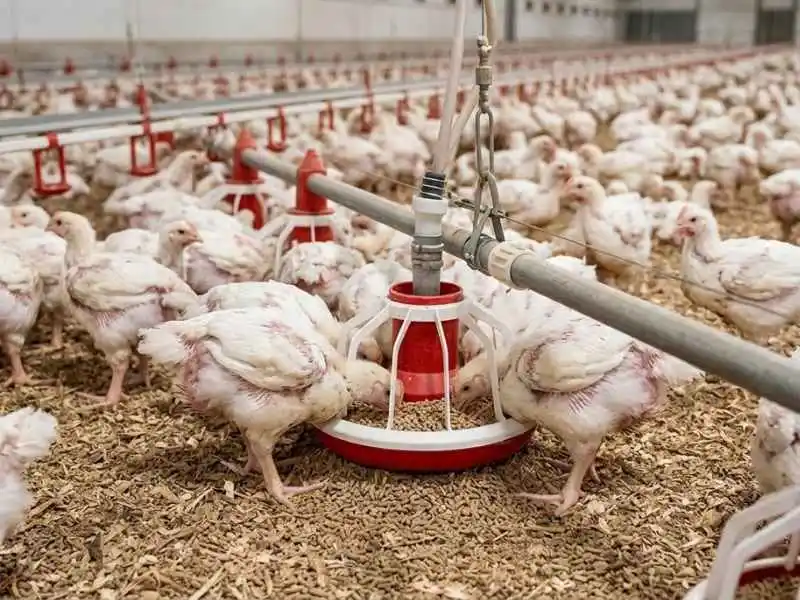
As birds grow, their energy requirement rises while their relative protein need drops slightly.
- Crude protein: 18–20%
- Metabolizable energy: 3,000–3,150 kcal/kg
- Form: Pellets (improves feed efficiency and reduces waste)
This is the stage where the biggest frame and muscle growth happens, so consistent feeding is critical — don’t restrict feed unless you’re specifically following a controlled-growth program.
3. Finisher Feed (6 Weeks to Market)
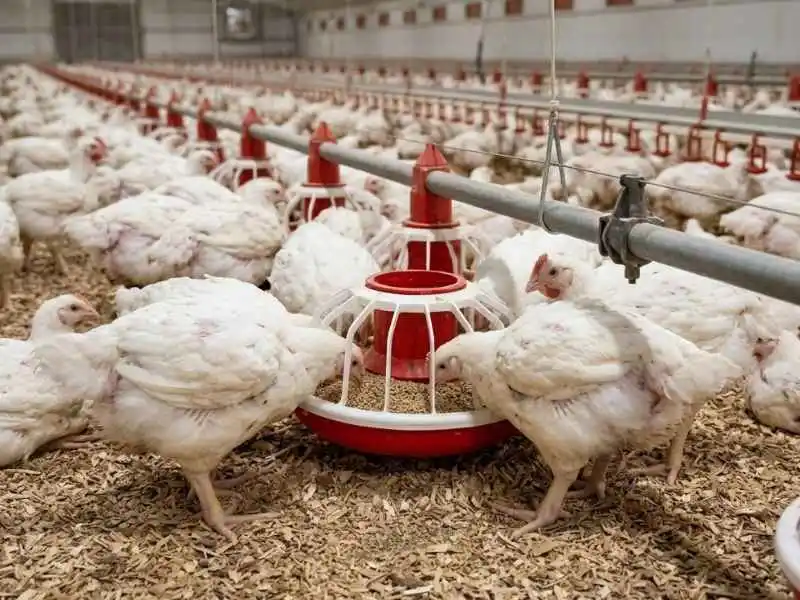
The final feed phase is built to maximize weight gain and improve meat quality before processing.
- Crude protein: 16–18%
- Metabolizable energy: 3,150–3,300 kcal/kg
- Focus: Higher energy density, often with added fat/oil
Some producers add a short “withdrawal” feed in the final 3–5 days that removes medications/additives ahead of slaughter, depending on local food safety regulations.
Broiler Feed Chart by Age (Quick Reference)
| Age (Weeks) | Feed Type | Crude Protein | Feed Intake (approx. per bird/day) |
|---|---|---|---|
| 0–3 | Starter | 20–24% | 15–40 g |
| 3–6 | Grower | 18–20% | 60–120 g |
| 6–8 | Finisher | 16–18% | 130–170 g |
Note: exact intake varies by breed (e.g., Cobb 500, Ross 308), climate, and management practices. Always check the specific feed intake and body weight guide published by your hatchery or breed supplier for the most accurate numbers.
What Ingredients Go Into Broiler Chicken Feed?
A balanced broiler ration typically combines:
- Energy sources: Corn/maize, broken rice, wheat
- Protein sources: Soybean meal, fishmeal, groundnut cake
- Fats/oils: Vegetable oil or fat blends for extra energy in finisher feed
- Minerals: Limestone and dicalcium phosphate for calcium and phosphorus
- Vitamin-mineral premix: Covers micronutrients not present in raw ingredients
- Additives: Enzymes for digestibility, probiotics for gut health, and coccidiostats to prevent coccidiosis
If you’re formulating feed at home rather than buying a commercial ration, working with a local poultry nutritionist or feed mill is strongly recommended — small formulation errors can significantly hurt growth rate and feed conversion ratio (FCR).
How Much Feed Does a Broiler Eat Per Day?
This is one of the most searched questions related to any broiler chicken feed guide, so here’s a direct answer:
On average, a broiler eats about 15–40 grams per day in week one, rising to 130–170 grams per day by week seven or eight. Total lifetime feed consumption for a broiler raised to roughly 2–2.5 kg live weight is typically around 3.8–4.2 kg of feed, depending on genetics and management.
How Many Times a Day Should Broilers Be Fed?
For the first two weeks, feed should be available continuously (ad-libitum), since chicks eat small amounts frequently. After that, most farms still use free-choice feeding rather than fixed feeding times, refilling feeders 2–4 times daily to keep feed fresh and reduce waste. Restricted feeding programs (giving feed only at set times) are sometimes used from week 3 onward to control growth rate and reduce leg problems, but this should only be done under proper guidance.
What Is a Good Feed Conversion Ratio (FCR) for Broilers?
FCR measures how much feed it takes to produce 1 kg of body weight. A good FCR for modern broiler breeds is between 1.5 and 1.8, meaning it takes about 1.5–1.8 kg of feed to produce 1 kg of live bird weight. A lower FCR means better efficiency and lower cost per kg of meat produced.
Common Feeding Mistakes That Hurt Broiler Growth
- Switching feed types too abruptly — always transition gradually over 2–3 days to avoid digestive upset.
- Running out of feed or water — even a few hours of feed deprivation slows growth and increases FCR.
- Feeding layer feed to broilers — layer feed has excess calcium and insufficient protein for meat birds. If you’re curious about that side of poultry keeping, see how to start layer chicken farming — it’s a very different feed and management program from broilers.
- Wrong feed form for age — feeding coarse pellets to day-old chicks makes it hard for them to eat enough.
- Poor feeder space — overcrowded feeders cause uneven growth and increase mortality.
- Ignoring water quality — dirty or algae-contaminated water reduces feed intake indirectly.
- Skipping vaccinations — good feed can’t compensate for a sick flock. Follow a proper vaccination schedule for broiler chickens alongside your feeding program for the best growth results.
Can You Make Homemade Broiler Feed?
Yes, many small-scale and backyard farmers formulate their own feed using maize, soybean meal, fish meal, bone meal, limestone, and a vitamin-mineral premix. This can reduce cost, but it requires accurate weighing and a proper nutrient balance — an unbalanced homemade mix is one of the most common causes of stunted growth in backyard flocks. If you’re new to formulation, start with a tested, published ration rather than guessing ratios.
Frequently Asked Questions About Broiler Chicken Feed
Q: What is the best feed for broiler chickens?
A: There’s no single “best” brand — the best feed is one that matches the correct protein and energy level for the bird’s current age (starter, grower, or finisher) and comes from a reliable, fresh source.
Q: At what age do you switch broiler feed?
A: Switch from starter to grower feed around 3 weeks of age, and from grower to finisher feed around 6 weeks of age, adjusting slightly based on the bird’s actual weight rather than age alone.
Q: How long should broilers be on starter feed?
A: Typically 2–3 weeks, though some farmers extend it slightly if chicks are smaller than target weight.
Q: Do broilers need grit?
A: If fed a complete commercial pellet or crumble diet, grit generally isn’t necessary. If you feed whole grains or free-range broilers on pasture, insoluble grit helps them digest food properly.
Q: Why are my broilers not gaining weight despite eating well?
A: Common causes include internal parasites, coccidiosis, poor feed quality, insufficient water intake, or missed vaccinations — see our vaccination schedule for broiler chickens to rule out disease-related growth issues.
Final Tips for a Successful Broiler Feeding Program
- Always provide clean, cool water — birds that don’t drink enough won’t eat enough.
- Store feed in a dry, rodent-proof space to prevent mold and nutrient loss.
- Weigh a sample of birds weekly to compare against the breed’s target weight chart.
- Don’t change feed suppliers or formulations abruptly mid-flock.
- Keep detailed records of feed intake and weight gain — this is how you calculate FCR and catch problems early.
- If you’re planning this as a business rather than a backyard project, revisit your poultry farming business plan in Pakistan regularly — feed is typically 60–70% of total broiler production cost, so your feed plan and business plan should stay aligned.
Following a structured broiler chicken feed guide like this one — matching the right feed type to the right age, watching intake closely, and avoiding common mistakes — is the fastest way to raise healthy, market-ready broilers with a strong feed conversion ratio.
For further technical reference, the Cobb-Vantress Broiler Performance & Nutrition Supplement and university extension resources such as Penn State Extension – Poultry are excellent, authoritative sources for breed-specific feeding data.