
Best egg laying Chickens That Produce the Most Eggs Annually
Layer hens are breeds selected for high egg production. A well-chosen layer flock can yield hundreds of eggs per year. Whether you want brown, white, or even blue eggs, the choice of best layer chickens and management can make all the diffIerence. The best layer chickens can produce 280 to 320 eggs each year, while some breeds lay fewer than 150 eggs annually. That’s a big difference and can affect how many eggs you collect.
Layer chickens are simply hens bred or selected to lay a large number of eggs annually. Most layer breeds reach maturity (start laying) around 5–6 months of age and continue to lay steadily for about 2–3 years at peak productivity.
Properties of a layer chicken
Lightweight Body and Feed Efficiency
A premier layer chicken typically possesses a lightweight, streamlined body type, which means they require less feed to maintain their weight and can convert those nutrients directly into eggs.
Exceptional Egg Production
Most defining property is an exceptional biological efficiency: an elite layer can reliably produce anywhere from 250 to over 300 eggs a year, maintaining peak production for the first two years of their life before naturally slowing down.
Unique Egg Colors
Layer hens differ in egg color too – some lay white eggs (e.g. Leghorns), others brown (Rhode Island Reds, ISA Browns), and some even blue or green (Ameraucana/Easter Egger).
Before jumping into breed rankings, it helps to understand what separates a high-production layer from an average bird. A good layer hen must have:
High Annual Egg Production
The best layers are bred to produce a significant number of eggs each year, often laying almost daily during their peak production months. According to Hobby Farms, the commercial White Leghorn regularly exceeds 300 eggs per year, a figure heritage breeds rarely match.
Excellent Feed Conversion Efficiency
Top laying breeds are highly efficient, converting a high percentage of their feed into nutritious eggs rather than just body weight.
The best commercial layer breeds convert roughly 2.0 to 2.5 lbs of feed per dozen eggs. Heritage breeds typically require 2.5 to 3.0 lbs per dozen — not a dealbreaker, but worth factoring into your cost-per-egg math.
Docile Temperament and Resilience
These birds generally have calm, easy-going personalities, making them less prone to stress and better suited to consistent production.
Stressed hens lay fewer eggs. Breeds prone to nervousness or aggression create flock-wide stress that suppresses laying cycles. Calm, docile breeds maintain steadier output even when conditions aren’t perfect
Laying Lifespan
Common hybrid layer hens might lay productively for a couple of years, certain hybrid breeds can maintain high output longer, while some heritage breeds may produce for four to five years at a slightly steadier pace.
Several factors determine how many eggs a chicken will lay:
This is the first real decision every poultry keeper faces. Here’s how to think about it:
Hybrid layers
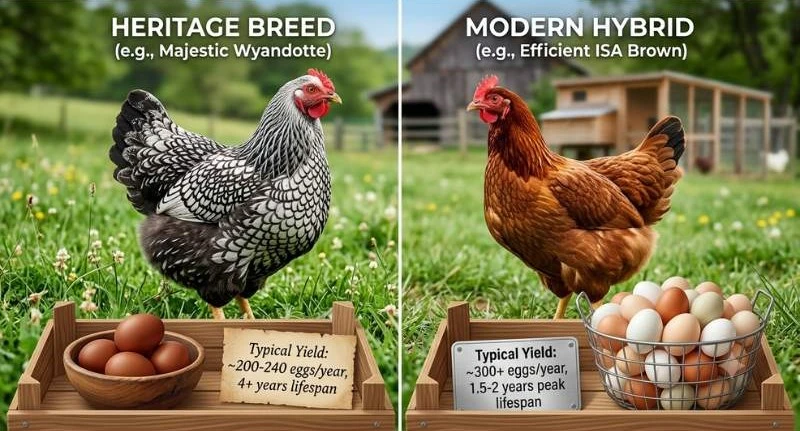
Breeds like ISA Brown, Golden Comet, and Red Star — are purpose-built egg machines. They produce more eggs per year than any heritage breed, require less feed, and are widely available from hatcheries. The main disadvantage is that these chickens produce lots of eggs for only 1–2 years. Since they don’t breed true, you can’t rely on their offspring to perform the same way, so you’ll need to purchase new chicks regularly. They also live for only about 4–6 years.
Heritage breeds
Heritage chicken breeds such as Rhode Island Reds, Australorps, Wyandottes, and Plymouth Rocks may take a little longer to reach their peak egg production, but they offer several long-term benefits. These breeds usually remain productive for 4–5 years, allowing you to enjoy fresh eggs for a longer time than most hybrid layers.
Another major advantage is that you can breed your own replacement chicks, saving money and helping you maintain a self-sustaining flock. They are also known for their calm and friendly temperament, making them easier to handle and manage, especially for beginners.
Among these breeds, Australorps are especially popular because they combine excellent egg production, a gentle personality, and a longer productive lifespan than many hybrid chickens. Although they may not lay as many eggs as commercial hybrids in their first year, their durability and ease of management make them an excellent choice for backyard flocks and small farms.
Below are some of the best layer breeds for backyard keepers. We list breed name, key traits, and typical egg production (approximate eggs per year) based on sources.
1. ISA Brown — Best Overall Layer
280–320 large brown eggs
Docile, easy to handle
Beginners, commercial farms, small backyard flocks
Brown
Large
4–6 years (1–2 years peak laying)
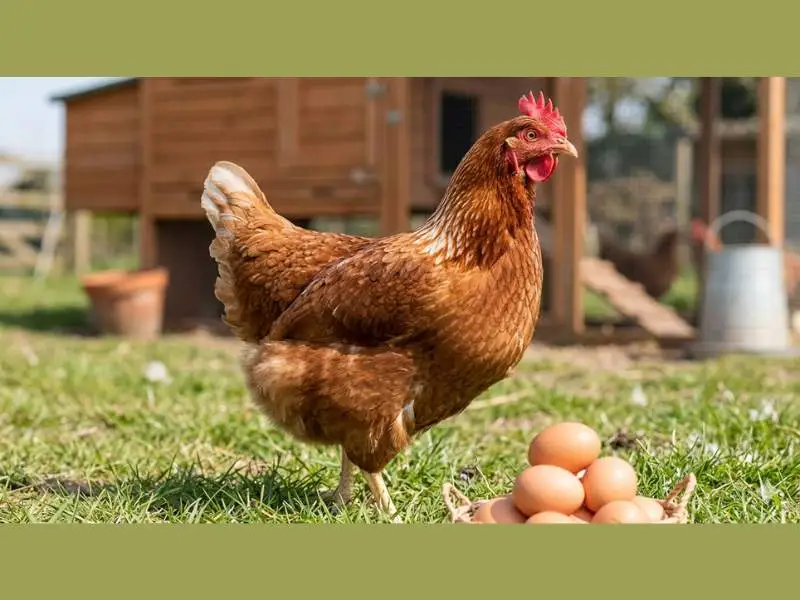
The ISA Brown is arguably the most popular egg-laying breed in the world for good reason. Developed for the commercial industry, this hybrid produces large brown eggs at a pace that few breeds can match.
They start laying at around 18 to 22 weeks and maintain strong output through their first two years. Kalmbach Feeds ranks them among the most reliable choices for anyone prioritizing consistent egg supply over breed longevity. For a full breed profile — including temperament, lifespan, feeding needs, and care tips — see our complete ISA Brown hen guide.
Pros
Cons
2. White Leghorn — Best for White Egg Production
280–330 white eggs
Active, alert, independent
Commercial farms, free-range systems, experienced keepers
white
Large
5–7 years (2–3 years peak laying)
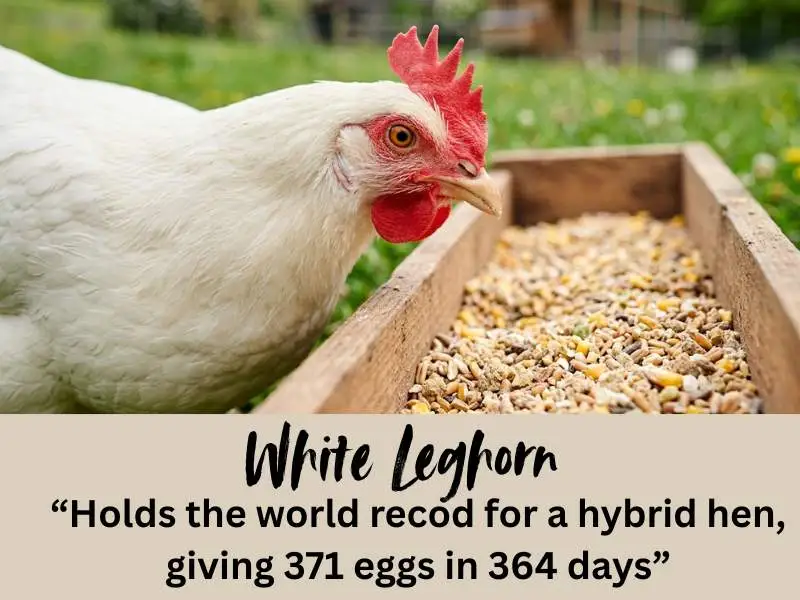
The White Leghorn is one of the world’s most efficient egg-laying chicken breeds and is widely used in commercial egg production. Originally developed in Italy and later refined in the United States, this lightweight breed is famous for producing an exceptional number of large white eggs while consuming relatively little feed. Stromberg’s Chickens reports that Leghorns can lay up to 300 white, medium-sized eggs per year.
The trade-off is temperament. Leghorns are energetic and can be skittish, making them harder to handle than other breeds. They thrive in warm climates with plenty of space to forage. For pure output, nothing beats them.
Pros
Cons
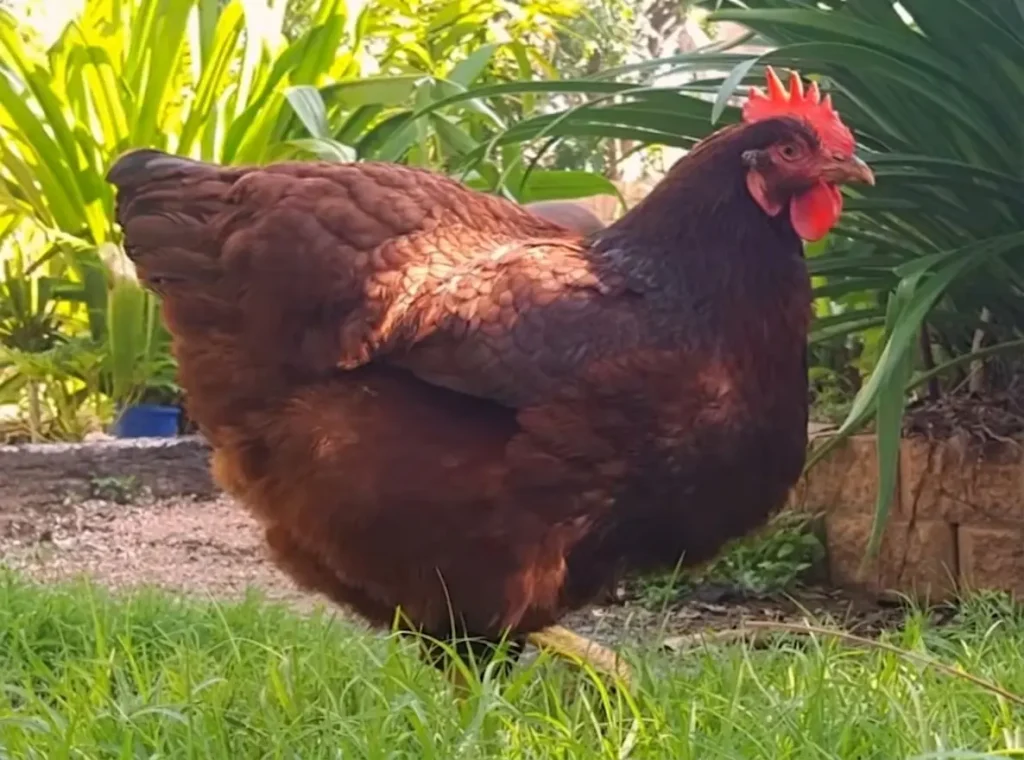
3. Rhode Island Red — Best Dual-Purpose Layer
250–300 large brown eggs
Hardy, friendly, adaptable
First-time keepers, cold climates, free-range setups
brown
Large
5–8 years (2–3 years peak laying)
The Rhode Island Red is one of the most popular dual-purpose chicken breeds, valued for both its dependable egg production and quality meat. Developed in the United States during the late 1800s, this hardy breed has earned a reputation for being productive, adaptable, and easy to care for in a wide range of climates.
Rhode Island Reds usually begin laying between 18 and 24 weeks of age and produce 250–300 large brown eggs each year. Their excellent hardiness, strong foraging instincts, and calm nature make them a favorite among backyard chicken keepers and small farms looking for a reliable breed that performs well beyond its peak laying years.
Pros
Cons
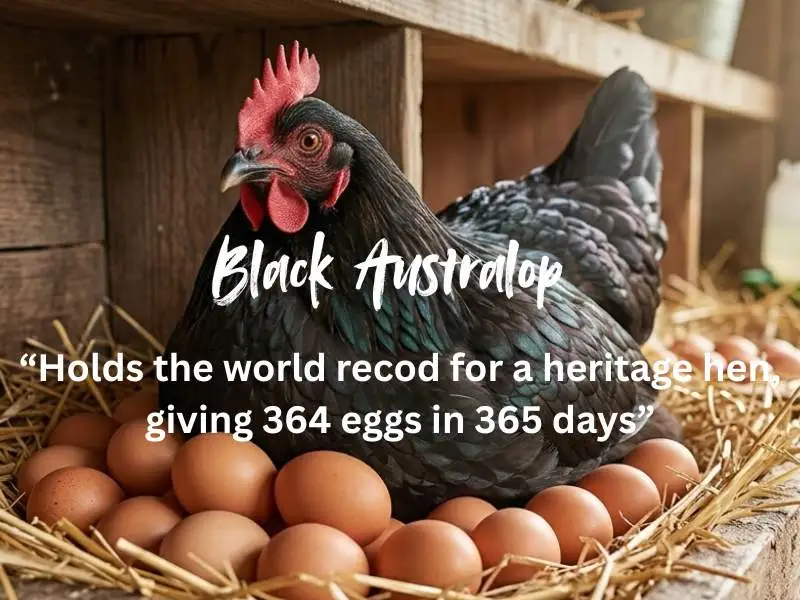
4. Australorp — Best Heritage Layer
250–300 light brown eggs
Calm, friendly, gentle
Backyard flocks, families, cold climates
Light brown
Large
6–10 years (2–3 years peak laying)
The Australorp is an Australian breed famous for its impressive egg-laying ability and gentle personality. Originally developed from Black Orpingtons, it once set world records for egg production and remains one of the best heritage laying breeds today.
Australorps typically begin laying at 20–24 weeks and produce 250–300 large light brown eggs annually. Their calm temperament, cold hardiness, and long productive life make them an excellent choice for families and backyard chicken keepers.
Pros
Cons
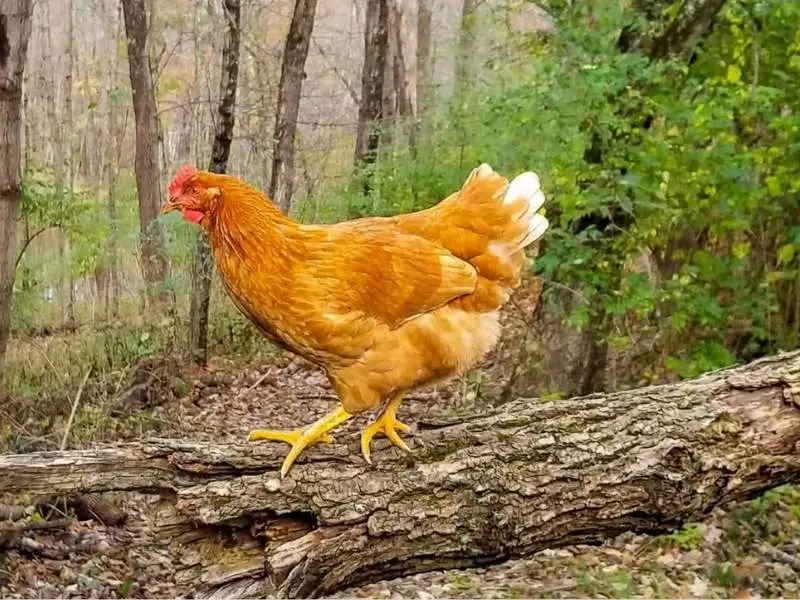
5. Golden Comet — Most Docile High Producer
280–330 brown eggs
Friendly, docile, curious
Beginners, backyard flocks, small farms
brown
Large
4–6 years (1–2 years peak laying)
Golden Comets are hybrid chickens bred specifically for high egg production. Known for their friendly personality and early maturity, they quickly become productive layers and are ideal for first-time chicken keepers.
They usually begin laying at 16–18 weeks and produce 280–330 large brown eggs per year. Their gentle temperament and excellent productivity make them one of the most popular backyard hybrids.
Note: Comets can be so productive that they sometimes face issues like egg binding, so good management is important.
Pros
Cons
6. Plymouth Rock — Best Dual-Purpose Layer
200–280 brown eggs
Friendly, calm, easy-going
Backyard flocks, families, cold climates
brown
Large
6–8 years (2–3 years peak laying)
The Plymouth Rock is a classic American breed appreciated for its dependable egg production, gentle nature, and excellent adaptability. Plymouth Rocks are notable for laying through winter months when many breeds slow down, making them a dependable year-round choice for colder regions.
Plymouth Rocks start laying around 20–24 weeks and produce 200–280 large brown eggs annually. Their calm behavior and cold tolerance make them one of the easiest breeds to raise.
Pros
Cons
7. Wyandotte — Best winter-Hardy Layer
200–260 brown eggs
Calm, friendly, independent
Cold climates, backyard flocks, free-range
brown
Medium to Large
6–12 years (2–3 years peak laying)
Wyandottes are beautiful heritage chickens recognized for their striking feather patterns and dependable egg production throughout winter. Their rose comb helps prevent frostbite, making them especially suitable for colder regions.
They generally begin laying at 20–24 weeks and produce 200–260 brown eggs each year. Their hardiness and attractive appearance make them favorites among backyard poultry keepers.
Pros
Cons
8. Sussex – Best Family-Friendly Layer
250–280 cream to light brown eggs
Friendly, curious, gentle
Families, backyard flocks, free-range
Cream to Light Brown
Large
6–8 years (2–3 years peak laying)
The Sussex is one of England’s oldest dual-purpose breeds, known for its friendly personality and dependable egg production. It adapts well to both backyard and free-range environments.
Sussex chickens usually begin laying between 20 and 24 weeks and produce 250–280 large cream to light brown eggs annually. Sussex hens are strong foragers, meaning they can supplement their diet on pasture and reduce your feed costs in free-range setups. Their calm temperament makes them excellent pets as well as productive layers.
Pros
Cons
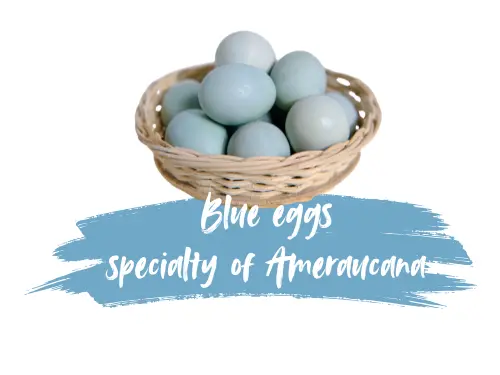
9. Olive Egger / Ameraucana – Best Colored Egg Layer
180–250 colored eggs
Friendly, curious, active
Backyard flocks, hobby keepers, colorful egg baskets
Blue, Green or Olive
Medium to Large
6–8 years (2–3 years peak laying)
Ameraucanas and Olive Eggers are known for producing beautiful blue, green, and olive-colored eggs. Ameraucanas are recognized pure breed, while Olive Eggers aren’t a standardized breed but a cross between blue and brown egg layers, producing a range of green, olive, and sometimes pink eggs that stand out dramatically in a carton. Freedom Ranger Hatchery notes that Olive Eggers can lay up to 325 large eggs between 18 and 80 weeks, making the best lines surprisingly productive.
They generally begin laying at 20–24 weeks and produce 180–250 uniquely colored eggs each year. These breeds are ideal for anyone wanting a colorful egg basket and an attractive backyard flock.
Pros
Cons
10. Novogen Brown – Best Commercial Brown Egg Layer
300–330 brown eggs
Calm, gentle, productive
Commercial farms, backyard flocks, beginners
Brown
Large
4–6 years (1–2 years peak laying)
Novogen Brown is a modern commercial hybrid developed for exceptional egg production and feed efficiency. It is widely used by commercial egg producers because of its reliability, early maturity, and consistent laying performance.
Novogen Browns typically begin laying at 17–19 weeks and can produce 300–330 large brown eggs annually under proper management. Their calm nature and high productivity also make them suitable for backyard keepers seeking maximum egg output.
Pros
Cons
Best choices for specific priorities
Did you know?
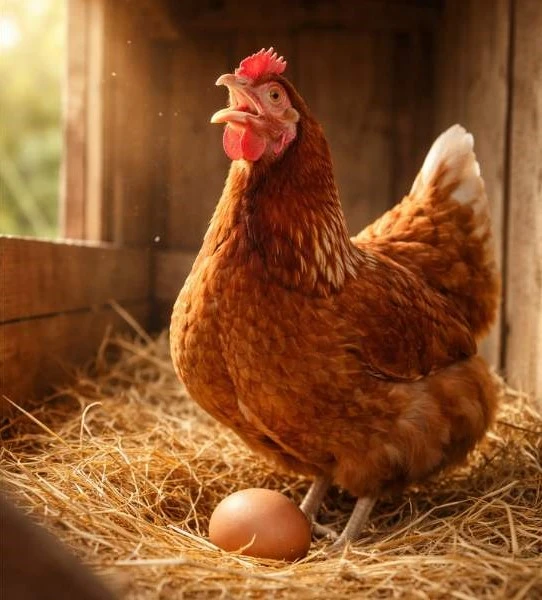
Good layers don’t just lay an egg and walk away quietly; they celebrate! Almost all top layers sing what poultry keepers call the “Egg Song.” It is a loud, rhythmic cackling (“buck-buck-buck-badaack!”) that the hen sings right after laying. Scientists believe it’s either to distract predators away from the nest or to announce to the rooster that she successfully did her job.
How to Maximize Egg Production from Your Flock
To keep your hens laying well, focus on these best practices:
- Optimal Lighting: Ensure hens get ~14–16 hours of light daily. In winter or short-day months, use a timed light in the coop (15W bulb) to extend daylight. This prevents large drops in production.
- Quality Nutrition: Feed a complete layer feed (16–18% protein) and supplement calcium (crushed oyster shells or eggshells) free-choice. Lack of nutrients immediately reduces laying. Provide fresh water at all times – even a few hours without water can cause a hen to stop laying for the day.
- Manage Broodiness: Broody hens sit on eggs instead of laying new ones, cutting into production. To discourage broodiness, break the behavior by removing nesting opportunities or temporarily isolating the broody hen (a wire-bottomed cage for a few days). Note that many top layers (like Leghorns, ISA Browns) are bred to be non-broody.
- Health & Biosecurity: Keep coops clean and dry to prevent disease. Vaccinate or medicated feed (if advised). Watch for mites and lice (dust baths help). Healthy, stress-free hens lay better. Avoid overcrowding; about 3–4 sq.ft. per hen indoors (more if no free-range) and ensure protection from predators to reduce stress.
- Age and Flock Rotation: As noted, peak laying is in years 1–2. By year 3, expect fewer eggs (production falls ~20% annually). Plan to introduce new pullets or rotate older hens out to maintain output.
The best layers chicken for your situation depends on three things: how many eggs you need, how long you want your birds productive, and what your climate and management setup looks like. For sheer output, ISA Browns, White Leghorns, and Novogen Browns lead the pack. For longevity and sustainability, Rhode Island Reds and Australorps are the smartest long-term investment.
Whichever breed you choose, match it with proper lighting, quality feed, and a low-stress environment — and your flock will reward you with a steady, reliable supply of fresh eggs year-round.
The Novogen Brown and White Leghorn compete for the top spot, with the best commercial Novogen lines reaching close to 395 eggs in the first 72 weeks. Among widely available breeds, ISA Browns and White Leghorns both regularly exceed 300 eggs per year.
Rhode Island Reds and ISA Browns are the top picks for beginners. Both are hardy, forgiving of imperfect management, easy to source, and reliably productive from around 18 to 22 weeks of age.
No. Hens lay eggs regardless of whether a rooster is present. A rooster is only needed if you want fertile eggs for hatching chicks.
Hybrid layers like ISA Browns peak in years one to two, with steep decline by year three. Heritage breeds like Rhode Island Reds and Australorps remain productive for four to five years, making them more cost-effective over the long run if you’re managing a self-sustaining flock.
A quality commercial layer feed with 16–18% protein, supplemented with free-choice oyster shell for calcium and clean fresh water at all times. Avoid high-fat treats in large quantities, which can displace the balanced nutrition of a layer ration.
Not naturally. Production dips in winter and during molt; supplemental light helps maintain output.
Most start between 16–24 weeks depending on breed.
Typical high-producing breeds lay 250–320 eggs/year; average backyard hens may lay 150–220 eggs/year.