
How Do Heritage Chicken Breeds Differ From Commercial Breeds?
If you’ve ever compared heritage vs commercial chicken breeds side by side, you’ve probably noticed they barely resemble each other in growth, lifespan, or flavor. One is built for backyard sustainability and generations of natural breeding — the other is engineered purely for speed and output. This guide breaks down exactly how they differ, and which one makes sense for your flock.
Heritage vs commercial chicken breeds are slow-growing, naturally mated purebred birds that can live 5–8 years, forage well, and reproduce naturally — while commercial breeds (like Cornish Cross broilers or production-line Leghorns) are fast-growing hybrids bred for maximum meat or egg output in 6–20 weeks, often unable to reproduce naturally, with shorter working lifespans.
What Are Heritage Chicken Breeds?
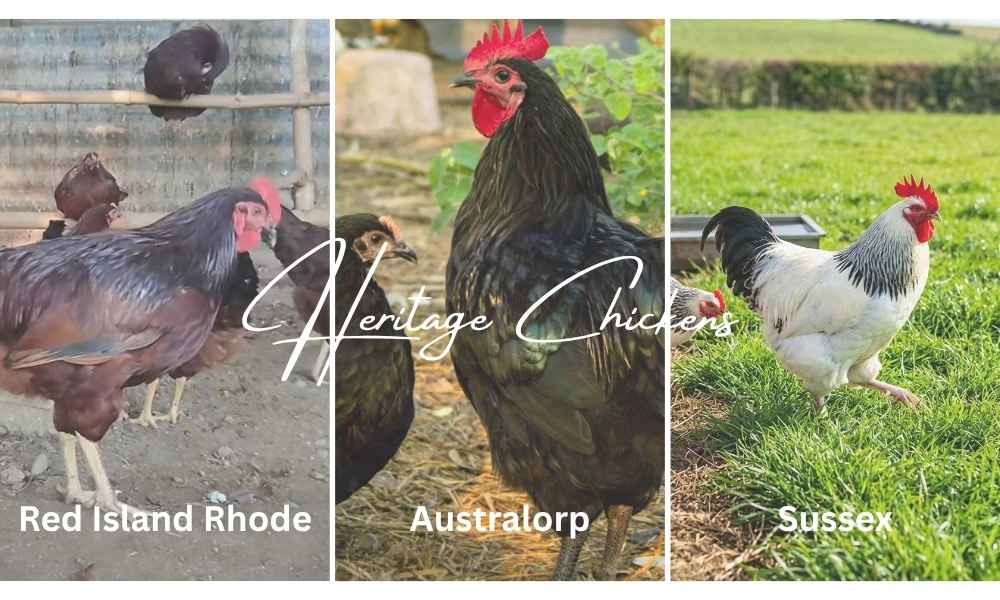
Heritage chicken breeds are traditional, purebred chicken varieties that have been raised for generations without genetic modification or industrial breeding programs. According to The Livestock Conservancy’s official heritage chicken definition, a true heritage chicken must be a purebred, standard-recognized breed, hatched from parent stock able to mate and reproduce naturally, and grown at a slow, natural rate to reach market weight.
Examples include the Plymouth Rock, Rhode Island Red, Wyandotte, Orpington, and Jersey Giant — breeds that were common on American farms before the 1950s.
What Are Commercial Chicken Breeds?
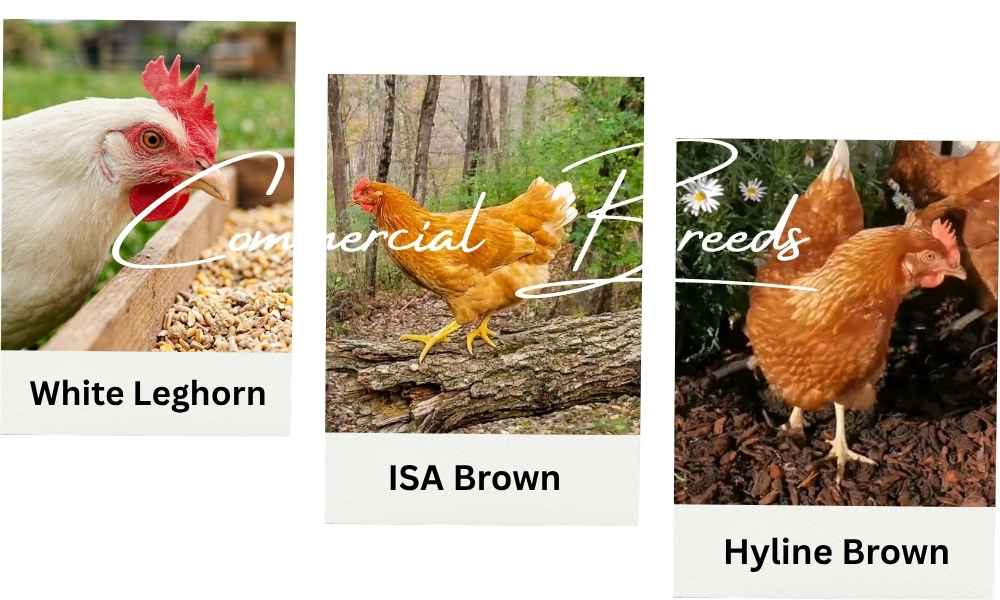
Commercial chicken breeds are hybrid birds developed specifically for industrial poultry production. They’re engineered through selective cross-breeding to grow quickly, convert feed efficiently, and produce high yields of meat or eggs in a short time frame.
The two dominant types are:
- Broilers (meat birds) — such as the Cornish Cross, ready for slaughter in 6–9 weeks.
- Layers (egg birds) — such as the production-line White Leghorn or ISA Brown, bred to lay 300+ eggs per year.
Heritage vs Commercial Chicken breeds: Key Differences at a Glance
| Factor | Heritage Breeds | Commercial Breeds |
|---|---|---|
| Growth rate | Slow (16–21 weeks to maturity) | Fast (6–9 weeks for broilers) |
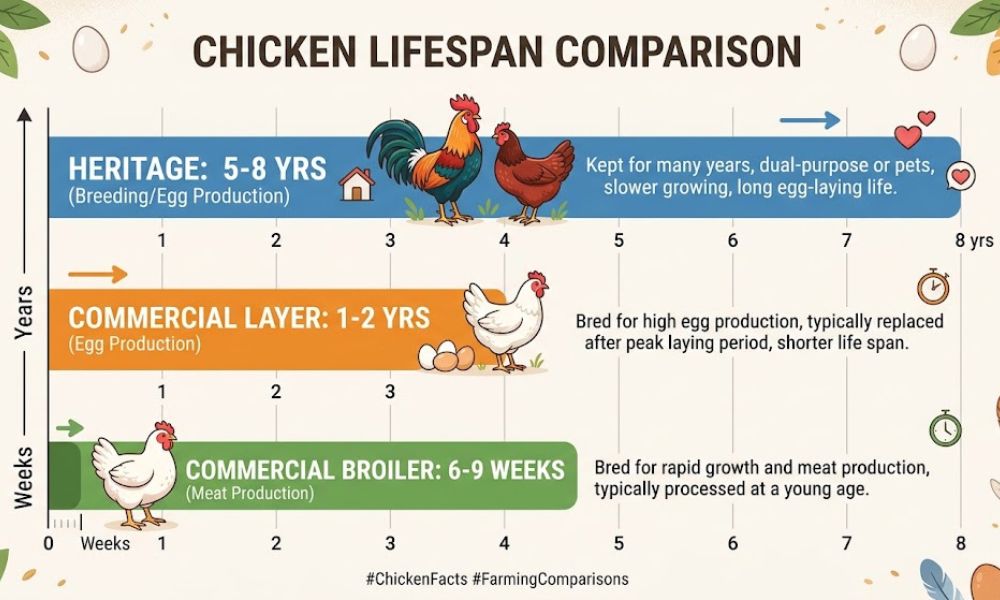
| Lifespan | 5–8 years | 1–2 years (production life) |
| Reproduction | Naturally mating; offspring generally retain breed characteristics | Many are hybrids/crosses; can reproduce, but offspring may not reliably reproduce the same production traits |
| Genetic diversity | High — purebred lines | Low — narrow hybrid gene pool |
| Foraging ability | Strong, active foragers | Limited, bred for confinement |
| Meat/egg output | Moderate | Very high |
| Disease resistance | Generally hardier | More vulnerable, needs controlled environment |
| Flavor (meat) | Richer, firmer texture | Milder, softer texture |
| Cost to raise | Higher per bird | Lower per bird (efficiency-optimized) |
| Best for | Backyard flocks, homesteads, sustainable farms | Large-scale commercial production |
Growth Rate and Time to Maturity
This is the single biggest difference. Commercial broilers like the Cornish Cross are bred to reach a 5–6 lb market weight in just 6–9 weeks — nearly three times faster than a heritage bird. Heritage breeds typically need 16–21 weeks to reach a comparable size, since their bodies grow at a natural, biologically balanced pace.
This slower growth reduces stress on the skeletal and cardiovascular systems, which is one reason heritage birds face fewer of the leg and heart problems common in fast-growing commercial stock.
Lifespan and Health
Heritage chickens can live 5 to 8 years or longer with proper care, and many continue laying eggs well into their later years. Commercial layers, by contrast, are typically productive for only 1–2 years before egg output drops and they’re culled from the flock. Commercial broilers aren’t bred for longevity at all — their bodies simply aren’t built to sustain the rapid growth long-term.
Genetic Diversity and Natural Reproduction
Heritage breeds maintain broad genetic diversity because they’re standard-recognized purebreds that reproduce naturally, generation after generation. This diversity is a genetic safety net — it helps flocks adapt to disease, climate, and regional conditions over time. Understanding heritage vs commercial chicken breeds is important because the two are developed with very different breeding goals.
Commercial hybrids are the opposite: they’re the product of narrow, closed breeding lines optimized for one trait (growth or egg output). Many commercial breeder lines are proprietary, meaning hatcheries and farmers can’t reliably breed a second generation with the same performance — they must keep buying new stock.
Meat and Egg Quality and Flavor
Many people prefer the firmer texture and more pronounced flavor of heritage chicken, although taste is subjective and depends on breed, age, diet, and cooking method. Commercial broiler meat is typically softer and milder, a result of rapid muscle growth with less connective tissue development.
Heritage eggs also vary more in size, shell color, and yolk richness, while commercial eggs are bred for uniformity — consistent size, shell strength, and shelf life.
Diet, Foraging, and Sustainability
Heritage breeds are strong foragers, capable of getting a meaningful portion of their diet from bugs, plants, and scraps — making them well-suited to pasture-based and regenerative farming systems. Commercial breeds are typically raised in controlled environments with formulated feed, since their bodies grow too fast to rely on foraging alone.
For homesteaders interested in sustainability, heritage breeds generally require less external input relative to their independence, though they take longer to reach a usable size.
Which Should You Choose Heritage vs commercial Chicken Breeds?
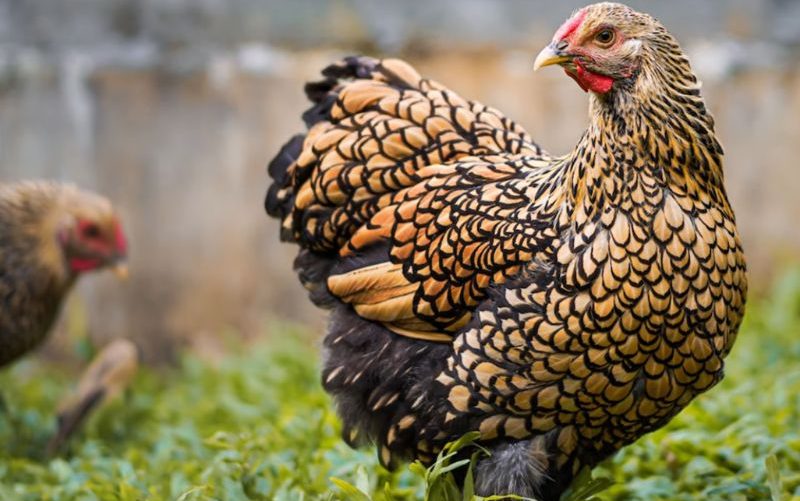
The better choice depends less on the breed itself and more on what you want from your flock.
Popular Heritage Chicken Breeds
Plymouth Rock — dual-purpose, cold-hardy, reliable layer
Rhode Island Red — excellent egg production, very hardy
Orpington — docile, great for families, good meat and eggs
Wyandotte — cold-tolerant, striking plumage, dual-purpose
Jersey Giant — one of the largest breeds, slow-growing meat bird
Delaware — historic American meat breed, calm temperament
Australorp — outstanding egg layer, gentle disposition
Frequently Asked Questions
Q: In heritage vs commercial chicken breeds, are heritage chickens better than commercial chickens?
A: Neither is objectively “better” — it depends on your goal. Heritage breeds are better for sustainability, longevity, and flavor. Commercial breeds are better for fast, high-volume meat or egg production.
Q: Can heritage chickens reproduce naturally?
A: Yes. True heritage breeds mate naturally and produce fertile eggs that hatch into chicks with the same traits, generation after generation.
Q: Why do commercial chickens grow so fast?
A: Commercial broilers are selectively bred hybrids, engineered over decades to convert feed into muscle mass as efficiently as possible, reaching market weight in 6–9 weeks.
Q: Do heritage chickens taste different?
A: Yes. Heritage chicken meat is generally firmer and more flavorful due to slower growth and more active, foraging lifestyles compared to fast-grown commercial birds.
Q: Are heritage chicken breeds endangered?
A: Several heritage breeds are considered threatened or watch-list status by conservation groups like The Livestock Conservancy, due to the poultry industry’s shift toward commercial hybrids.
Q: Is it cheaper to raise heritage or commercial chickens?
A: Commercial breeds are cheaper per pound of meat or egg produced due to feed efficiency. Heritage breeds cost more per bird but offer longevity and reduced restocking needs.
Q: Can you breed commercial hybrid chickens?
A: Yes. Commercial hybrid chickens can reproduce, but their offspring may not consistently inherit the same combination of traits that made the parent hybrid highly productive. This is why commercial producers generally purchase specialized replacement stock rather than relying on successive generations.
Q: Are heritage chickens more sustainable than commercial chickens?
A: Heritage chickens can be a good fit for small-scale, pasture-based, and self-sufficient systems because they can reproduce naturally and are generally well suited to outdoor production. Commercial breeds, however, can be more feed-efficient and productive, making them highly efficient for large-scale meat or egg production.
Conclusion
The core difference between heritage and commercial chicken breeds comes down to speed versus sustainability. Commercial breeds are optimized for rapid, high-volume production, while heritage breeds prioritize natural growth, genetic diversity, and long-term flock health. For backyard keepers and small farms focused on self-sufficiency and flavor, heritage breeds are usually the stronger choice. For large-scale meat or egg operations, commercial hybrids remain the industry standard.